
Upland Previous Residents by Era
Different Upland sources answer different parts of a house-history question. The current parcel card gives a starting identity. The recorder index supplies an owner transaction trail from its online opening, while the library and federal census add occupants. Newspapers, permits, probate files, and photographs can explain a change between two dated entries. No row below should be read as a complete resident list. It is an evidence layer with its own keeper, coverage, and limits.
| Source | Years It Covers | Where Held | What It Shows |
|---|---|---|---|
| Parcel and assessment record | Current; valuation history 1978-present | San Bernardino County ARC | APN, situs, assessment identity, mailing field where displayed |
| Recorder name index | 1925-present online | ARC Official Public Records | Grantor, grantee, title, date, document number |
| Earlier deed books and indexes | Before 1925, exact book range to verify | Hall of Records, Hesperia, archives or catalogs | Older ownership transactions and legal descriptions |
| Upland local history | Late 1800s-present, collection-dependent | Upland Public Library | Directories, newspapers, photographs, yearbooks, oral histories |
| Federal census | Public through 1950 under the 72-year rule | NARA, Ancestry, FamilySearch | Households, relationships, ages, occupation and tenure clues |
| Permits and code records | Digital start not verified | Upland Building and Safety or City Clerk | Construction roles, project dates, address and APN references |
For a recent ownership question, begin with the parcel and recorder rows. For a late nineteenth-century family question, begin with the library, North Ontario and Magnolia name variants, newspapers, and census material. The previous residents of an address appear most clearly when an owner entry and an occupant entry share the same place, date range, and legal description.
Upland APN First
An address is a useful human label, but an assessor parcel number is the stronger bridge between present records and older deeds. Open San Bernardino County Assessor Property Information and Parcel Access with the situs address or map. Capture the APN, legal subdivision reference, current assessed owner where shown, and the difference between situs and tax mailing address. A mailing address tells where a bill is sent. It does not establish who occupies the parcel.
Normalize street direction, suffix, and spelling before deciding that a historical record is missing. If the parcel has changed through a split or merger, the older legal description may be the only stable link. The assessor's historical valuation access begins in 1978, but that is an online assessment range, not the age of the land or the start of ownership.
The house-history handoff is straightforward: address to parcel, parcel to APN, APN to legal description, legal description to recorded document, and dated document to a named owner. Only after that owner chain is anchored should a directory or census entry be treated as evidence about an occupant at the same place.
Upland Previous Residents in Deeds
The San Bernardino County recorder's online index begins in 1925 and is organized around document number, date, title, grantor, and grantee. It does not index ownership by street address, and the web result is index-only. Use the current assessor name or APN to choose a party search, then obtain the document when the legal description needs proof.
- Record the current assessed owner, APN, situs, subdivision, and any visible legal-description reference from Parcel Access.
- Search the owner as grantee in the ARC Official Public Records recorder index, narrowing by date or document type when the name is common.
- Order the acquisition deed or plan an appointment to inspect it. Confirm the legal description and identify the seller, who was the grantor in that transfer.
- Search that seller as a grantee in an older transaction. Repeat the sequence while checking document numbers, dates, title, and property description.
- When the chain reaches the online cutoff, move to the Hall of Records in San Bernardino or the High Desert Government Center in Hesperia for office research, copies, or earlier indexes.
- Grantor and grantee
- The grantor transfers an interest; the grantee receives it. Searching both roles prevents a chain from stopping at the first deed.
- Chain of title
- A dated sequence of recorded transfers used to follow ownership of the same parcel, not a list of every person who lived there.
- Legal description
- The recorded land identity, such as a lot and subdivision reference. It is often more reliable than an old street number.
Recorder staff can be reached through Recorder-Clerk Services at 909-387-8306. The county also provides online and mail copy routes, but the index itself does not reveal the deed image. A prior owner is not automatically a previous resident.
Upland Before the 1925 Cutoff
The 1925 line is an access cutoff, not a deed cutoff. San Bernardino County was created in 1853, and land records can predate Upland by decades. When the web index stops, the next step is a counter, an older bound index, microfilm, an archival catalog, or a focused request to the record custodian. The Hall of Records in San Bernardino and the High Desert Government Center in Hesperia are the documented places to pursue document images and office research; appointments are strongly encouraged.
Older work also needs geographic patience. Upland was known as North Ontario or Magnolia before its 1906 incorporation. A deed, directory, newspaper, or census entry may use one of those names rather than Upland. Search all three terms, compare the legal description, and note township or county wording in the original source. A missing “Upland” hit is not proof that the family or parcel was absent.
For archival help, the California State Archives catalog can point toward selected historical government, vital, court, probate, naturalization, and local-government records. The archives do not replace the county deed chain, but a catalog inquiry with the county, name, date, and volume reference can identify the next shelf or office.
Upland Directory Occupants
Ownership is only half of the previous-resident question. Upland Public Library's non-circulating Local History Collection reaches the late 1800s and confirms directories, local business and city documents, newspapers, photographs, yearbooks, oral histories, and other materials. Staff consultation is important because the official page does not publish a complete publisher list, exact volume run, or verified reverse-directory year range. Ask for the title page, nominal year, canvass date, geographic coverage, and whether a street section exists.
Use a name-to-address entry and a street or criss-cross section as two separate checks. Copy the spelling, initials, spouse notation, occupation, address, owner or renter mark if present, and abbreviation key. A directory can reflect a canvass from the prior year. An omission can mean a move, death, refusal, spelling error, publication gap, or a coverage boundary. It is a dated snapshot, not a live roster.
- Find the household in the closest directory year and copy the address exactly.
- Check the street or reverse section when the volume provides one, then compare nearby entries.
- Pair the directory year with a 1900-1950 census year to test relationships, age, birthplace, tenure, and occupation.
- Search Upland News for the name, spouse, street, business, and the older place names North Ontario and Magnolia.
The full collection-reading method belongs with the Upland city directory collections. Here, the purpose is narrower: connect a dated occupant clue to the same APN or legal description already established through deeds.
Upland Voter Files Need Purpose
A voter record can help with a lawful, current address question, but it is not a general historical directory. California My Voter Status is a self-authentication tool using name, date of birth, and a driver's license or state ID number or the last four digits of a Social Security number. It is not searchable by street or by a stranger's name. A fuller county file requires an authorized election, scholarly, journalistic, political, or governmental purpose under Elections Code sections 2180-2194.1.
The Secretary of State voter-file request instructions show the formal route. A requester identifies the person or organization, address, intended statutory purpose, users, security, storage, and original signature. County requests go through the Registrar of Voters, including in-person or mail submission. A qualified file may support a present street or precinct study, but protected and confidential addresses remain withheld.
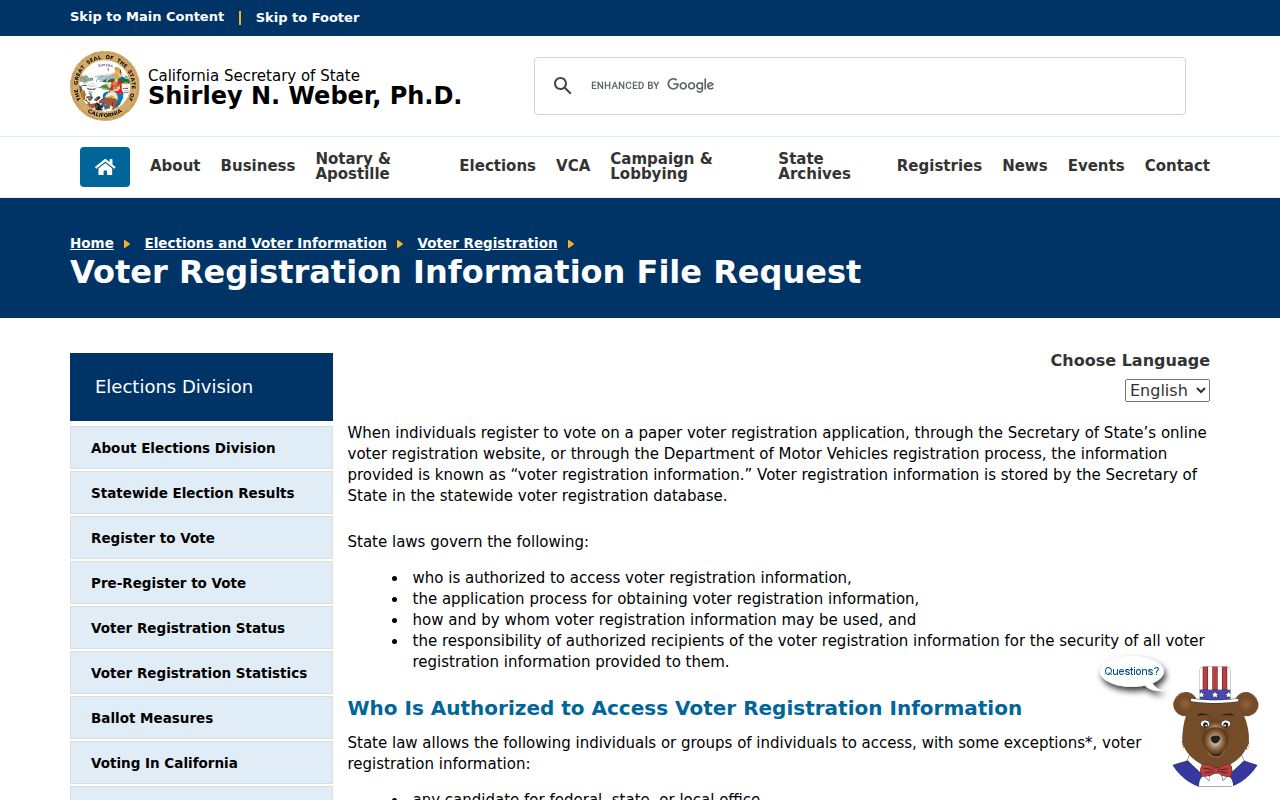
The request screen is a reminder to keep a current election record separate from past residents. It can provide a lawful lead when the purpose qualifies, but it cannot fill every gap in a directory or prove that a voter lived at a parcel during an earlier decade.
North Ontario and Magnolia
Upland's historical name change is one of the strongest quirks in a house-history search. The area was called North Ontario or Magnolia before incorporation in 1906, and Upland News began in 1901 as North Ontario News. Search the place name that fits the source's date. Newspapers, water-rights records, photographs, business entries, and local documents can preserve people who never appear under the modern city name.
Business records can add context when a past resident ran a shop, farm, water company, or other local enterprise. The California Secretary of State business-record information page explains what filings and copies can reveal. Entity addresses, agents, officers, managers, and filing dates can tie a surname to an era and a commercial place, but a business filing is not proof that an officer lived at the house.
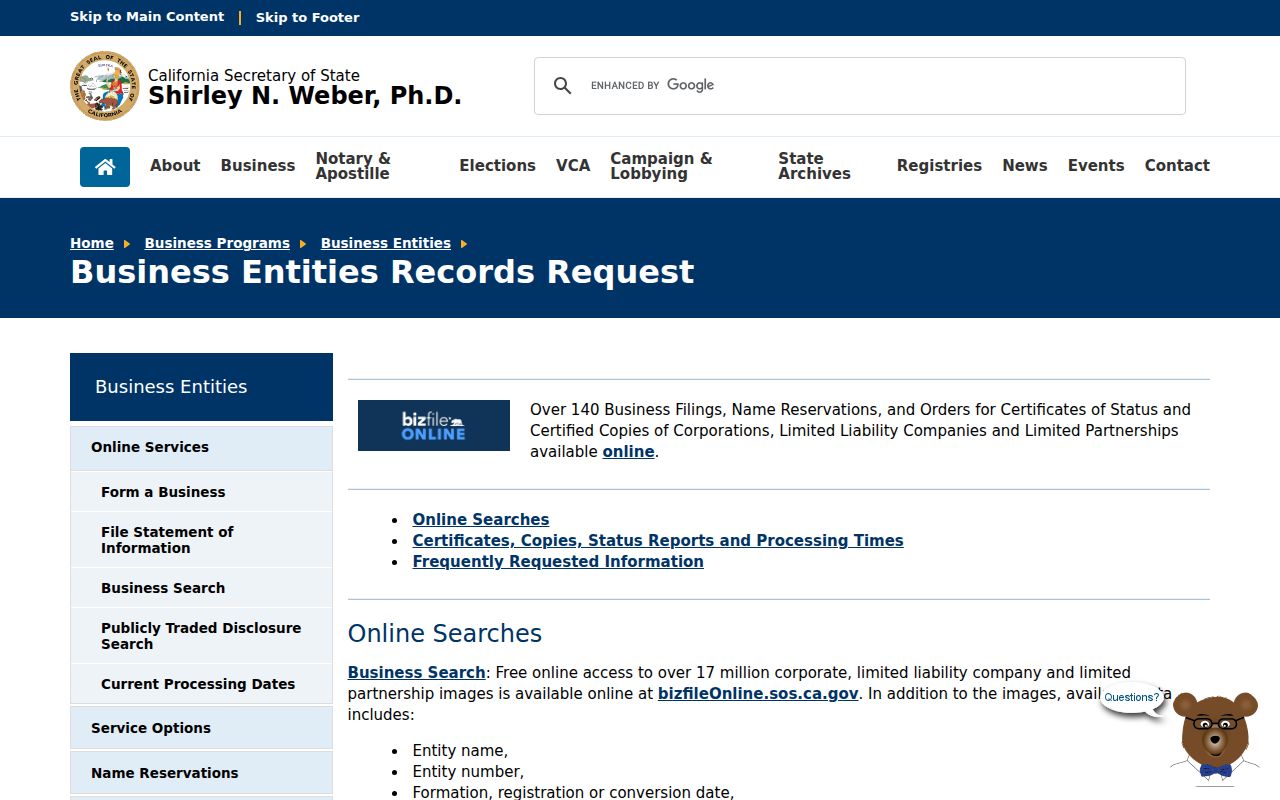
The captured business-record route is useful as a companion trail. Match the entity number, filing date, address, and newspaper notice to the parcel history, and keep the business address distinct from a household address.
Upland 1907 Sanborn Quirk
The Library of Congress digitized a 1907 Ontario Sanborn set of 17 sheets that names Upland as a secondary place. That is a valuable local quirk: a searcher who looks only for a standalone Upland map may miss the sheet set. The map can show a building footprint, use, material, street layout, and old numbering context for a place that appears in a directory or deed.
Sanborn evidence is spatial and descriptive. It can help decide whether a structure stood on the same block or whether an old number needs further checking, but it does not prove title, a sale, or the identity of every household. Compare its sheet index with the legal description, subdivision map, directory street section, and permit records.
No verified citywide street-renumbering year was found in the Upland research. When numbers seem to shift, test the APN, lot or subdivision, cross-street, Sanborn sheet, and newspaper wording before declaring that two addresses are different houses.
Upland Permits Are Not Resident Rolls
Upland Building and Safety records can date changes at an address. The construction application identifies an owner, project address, APN, contractor or owner-builder, work description, and valuation. Those names are roles in a project. They may be an owner, architect, contractor, or applicant rather than a person who lived in the house.
The online customer and self-service portal may show basic permit activity, but the stable public research did not expose a complete field list or earliest permit year. When the portal misses an address, send the City Clerk a focused California Public Records Act request with the street address, APN if known, date range, and the existing records sought, such as applications, issued permits, inspection or final records, and publicly disclosable code cases.
Upland City Clerk requests concern existing records. A request asking staff to name everyone who lived at a house asks for a conclusion the office may not hold. A request for dated permit files can add a sound event to the house history without turning construction paperwork into an occupant list.
Upland Obituaries and Probate
When an owner or occupant disappears from a directory, an obituary, probate notice, cemetery entry, or newspaper legal notice can explain the next part of the trail. Search Upland News and the digitized North Ontario News material by exact name, initials, spouse, street, business, and event date. Old type and OCR create gaps, so browse around a known date and compare the notice with a deed, directory, or census entry.
Probate can connect a deceased owner to a personal representative, heirs, or a later property transfer in the public portions of a Superior Court file. It does not open sealed exhibits or private information. A court case number and filing district are the right starting points for a file request; a newspaper notice is a lead, not a certified court record.
Vital certificates have a separate California access model. The California Health and Safety Code provisions for vital records distinguish authorized certified copies from informational copies. Public marriage records can have an informational route, confidential marriages are restricted, and adoption and original birth records follow separate rules.
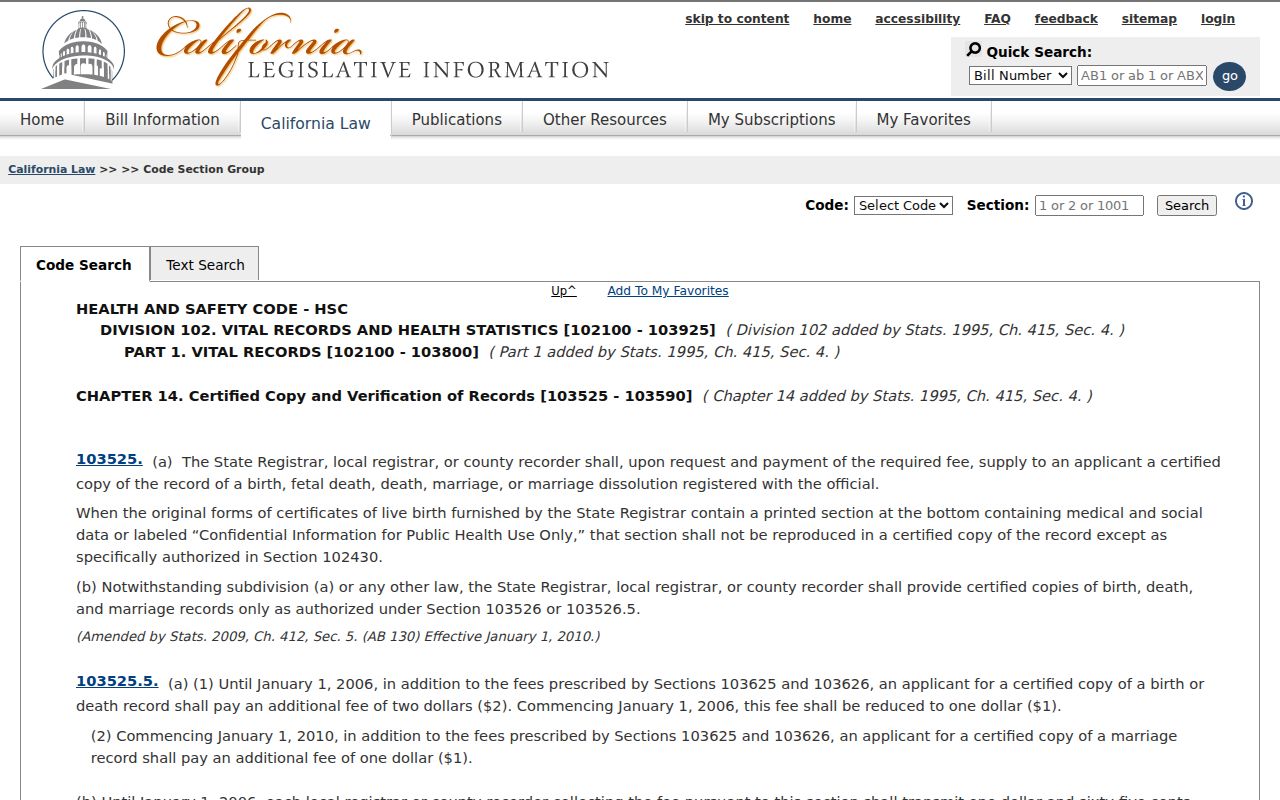
The statute image belongs in the evidence chain because it prevents a common mistake: assuming an old or recent certificate is automatically open to anyone. Use the county Recorder-Clerk, County Public Health for very recent death registration, or CDPH route that fits the record and requester.
Lawful Upland House History
House history is a valid personal and family-history project when the evidence is handled with care. Keep a research log with the source, date, page or document number, place name, and the exact field that supports a conclusion. Treat owners, occupants, business contacts, voters, heirs, and newspaper mentions as different roles. A match should rest on more than a surname and Upland label.
California's Safe at Home program and confidential voter-registration protections exist so eligible people can keep residential addresses out of many public-facing records. Utility and DMV address data are not open substitutes. If a source exposes a protected address or a correction is needed, use the custodian's privacy or correction channel instead of copying the information into a new list.
Previous residents research should stop when the source closes, the identity is uncertain, or the work would turn a public clue into surveillance of a living person. Verify with the record keeper, respect a request not to be contacted, and never use a deed, directory, voter file, or obituary to stalk, harass, intimidate, or harm anyone.
House-history boundary. Upland previous-resident research is for lawful personal, family, and archival purposes. Public records can support a past-owner or past-occupant question, but they do not authorize tracking or repeated contact with a living person.