
Upland ZIP Coverage
Upland's postal geography is a small set with an important warning attached. San Bernardino County and USPS materials place 91784, 91786, and 91785 in the Upland routing conversation, but the rows do not carry the same meaning. The first two are used for broad geographic delivery areas. The third needs a current USPS check before it is treated as active, residential, or even available for the kind of address search a reader may have in mind.
| ZIP Code | Areas Covered | Post Office | Notes |
|---|---|---|---|
| 91784 | Northern Upland, foothill and north-of-central areas; postal San Antonio Heights | Upland postal city | Reaches outside incorporated Upland |
| 91786 | Central and southern Upland, including downtown, the civic center, and much of the developed valley floor | Upland postal identity | Delivery area is not the city boundary |
| 91785 | Associated with Upland routing references, but its current geographic role is not established here | Verify current USPS identity | Active and PO-box status need verification |
There is no supported population count or official ZIP-wide resident total to add to this table. A postal city is a delivery label, not a census unit, parcel layer, or public household roll. The Upland ZIP code directory is strongest when it says what is known, labels what still needs verification, and sends a specific address to the right custodian.
Upland ZIP 91784 Geography
The USPS city-and-state ZIP lookup is the live route for checking the general Upland set, while the USPS postal basics explanation supplies the key rule for 91784: ZIP Codes do not necessarily follow municipal lines. Its northern Upland reach includes the postal San Antonio Heights area. San Antonio Heights is outside incorporated Upland, so a mailing address that says Upland can send land-use, permit, fire, and address questions to county custodians rather than Upland City Hall.
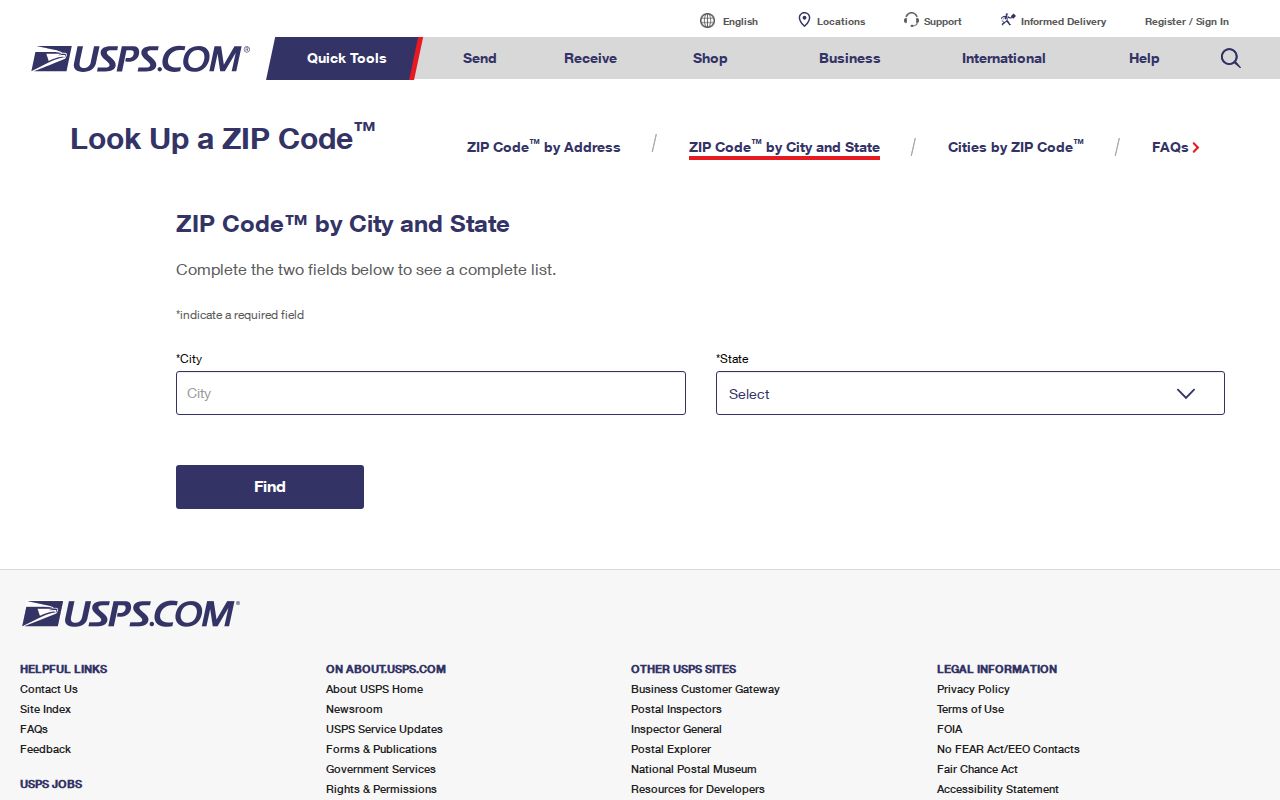
The USPS city-and-state screen is useful for checking the general Upland set, while the address lookup is the better test for one destination. The image shows a postal lookup route, not a list of Upland residents. Use it to confirm the postal answer, then use the Upland Community View and online maps to examine parcels, districts, and the city-versus-county setting.
That split matters for a postal search. A 91784 result can be a city parcel or a county-governed San Antonio Heights parcel. The same ZIP label can therefore lead to different permit offices, fire records, land-use rules, and public-record request paths. The postal answer comes first, but jurisdiction is the second check.
Upland ZIP 91785 Verification
91785 is the caveat in the Upland ZIP set. A ZIP code's current status matters here: the research associates it with Upland sorting references, yet the available USPS lookup did not provide a stable descriptive page that settles whether the code is active now, limited in use, or PO-box-only. That uncertainty is material. It would be wrong to present 91785 as a normal residential area, attach a population figure, or promise a ZIP filter for it.
For a specific 91785 question, enter the complete address in the USPS address lookup and record the returned ZIP and city label. If the question concerns a parcel, check the result against County Assessor Parcel Access and the relevant city or county boundary layer. A PO-box result may identify a delivery destination without identifying a physical parcel. If USPS does not return the code for the address, do not force the code into a resident directory search.
This is also why a ZIP directory should preserve a verification date in research notes. Postal assignments can change, while old web references can remain visible. The present status of 91785 needs verification from USPS before any claim about current activity, geographic coverage, or filtering is made.
Upland Residents by ZIP
A postal search works best as a narrowing step, not as a name list. Start with the postal answer for the address or area, then move to a parcel identifier and the record set that answers the real question. The county assessor landing page documents parcel and map access, but it does not promise unrestricted owner-name bulk querying or a stable ZIP-wide filter. California's voter tools impose a different boundary: the public page authenticates a voter, while a broader file requires a permitted purpose.
- Use the USPS Upland city-and-state lookup for the general ZIP set, then use its address mode for a specific destination.
- Open San Bernardino County Assessor Property Information and Parcel Access with the address or APN; save the parcel identifier and situs address.
- Check the parcel in Upland Community View for city, district, historic, school, and other map context instead of assuming the postal label answers jurisdiction.
- Use California My Voter Status only for the authenticated voter's own status. A qualified requester may ask the county elections office about a geographic product, but the application must state a lawful purpose and follow its file rules.
- Once the ZIP has narrowed the search to a street or APN, use the Upland street directory for the address-keyed chain rather than treating ZIP as the final record key.
The result is a repeatable path: postal code, physical parcel, jurisdiction, then source-specific record. It protects the reader from mistaking an area label for a current roster while still making a ZIP directory practical.
Upland ZIP Portal Limits
Several Upland-related portals look like search tools but answer different questions. The field table below separates the input from the result and the limit. The California My Voter Status form asks for exact personal identifiers. It is not a public street, name, or ZIP browser. Likewise, Parcel Access gives a parcel path, not a guaranteed ZIP export.
| Search route | Input | What it returns | Limit |
|---|---|---|---|
| USPS city and state | City and state | General ZIP set | Does not draw a municipal boundary |
| USPS by address | Complete delivery address | ZIP for that address | Does not identify a resident |
| ARC Parcel Access | Address, APN, or map navigation | Parcel, property, and assessment fields | No documented ZIP-wide filter on the landing page |
| My Voter Status | Name, DOB, DL/ID or last four SSN | Authenticated voter status and address fields | Private self-authentication, not a stranger search |
| County voter-file request | Geography, purpose, users, security, signature | Product for a qualified requester | Elections Code limits apply |
One public search screen does not turn every other system into a ZIP directory. A ZIP field can be present in a mailing field without being a supported query field. Record the search mode you actually used, and do not describe a portal as ZIP-capable when the research only confirms address, APN, map, or self-authentication.
The California Department of Consumer Affairs license search illustrates the same distinction. It is a professional-license search with board, name, city, county, status, and license fields. It is not a Upland ZIP residents list, even when a public address of record appears in a result.
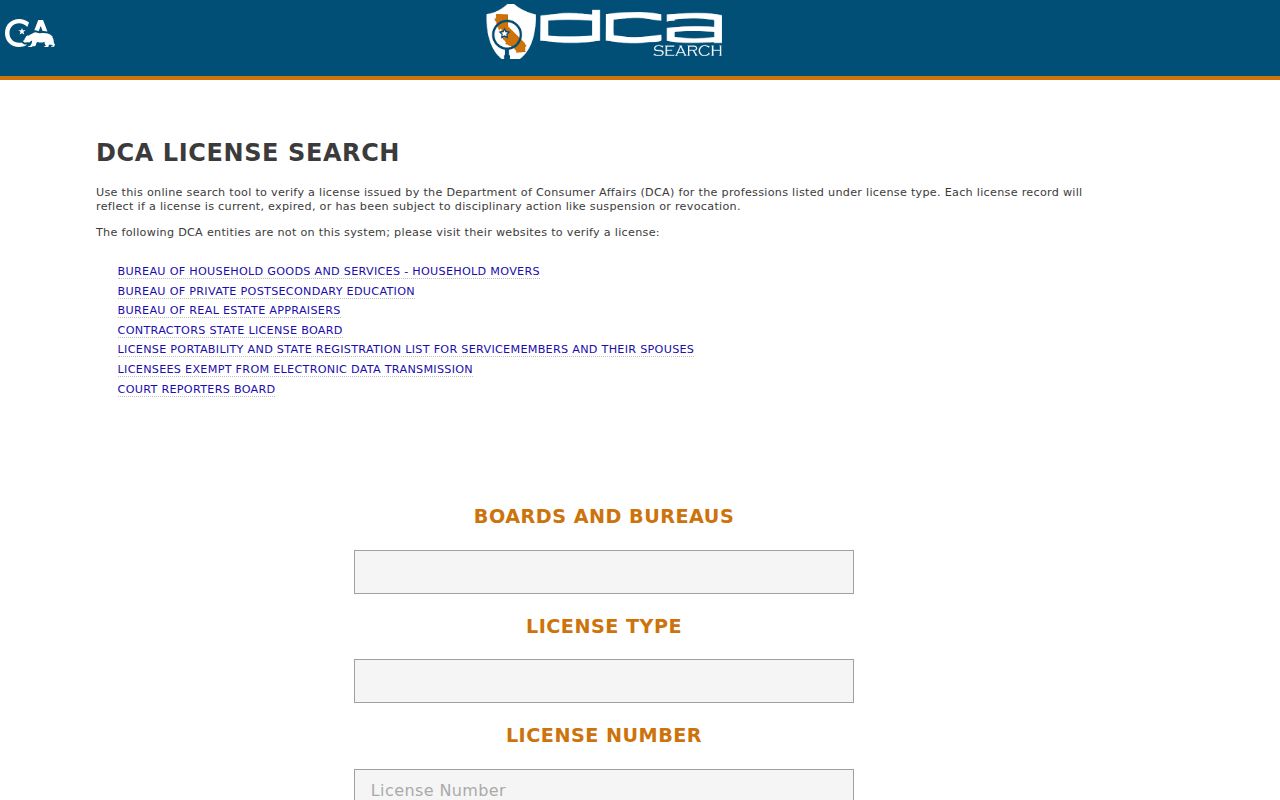
The license screen is useful only for the license question it was built to answer. A public address of record may be an office or contact point, and it should not be recast as proof of a home or current Upland residence.
Upland ZIP and City Lines
USPS geography and Upland jurisdiction overlap without matching. A mailing city can cross a city line, and a city's parcels can have delivery arrangements that are best checked one address at a time. The practical consequence is simple: use the postal directory to identify a route, then ask which government or archive holds the record. City-created permits, local licenses, and City Clerk requests belong to Upland when the parcel is inside the city. San Antonio Heights can require county land-use or fire channels even when the envelope says Upland.
- ZIP versus ZIP+4
- A postal code identifies a broad delivery area; the added four digits narrow routing for a delivery segment. Neither is a resident identity field.
- PO-box ZIP
- A code used for post-office boxes can point to a postal pickup location rather than a physical home or parcel.
- Unique ZIP
- A limited code assigned to one organization or a narrow destination pattern. It should not be treated as a normal neighborhood boundary without USPS confirmation.
- Carrier route
- A delivery route used inside postal operations. It is finer than a postal code but is not a public household roster.
For a records request, keep three labels separate: postal city and ZIP, physical situs address, and legal jurisdiction. That vocabulary reduces misrouted requests and prevents a Upland mailing label from doing more work than the evidence supports.
Upland Situs and Mailing Fields
Parcel research begins with the situs address, the physical place tied to a parcel. A mailing address is where a tax bill or other correspondence is sent. A legal description identifies the land by lot, block, subdivision, or another recorded description. An APN links the county's map and assessment systems, but APNs can change after splits or mergers. These fields help connect a ZIP question to a record without pretending they name everyone who lives there.
The county assessor's materials describe property information, historical assessment valuations from 1978-present, and parcel/map searching. They do not establish an unrestricted occupant directory. ARC cautions that assessment data do not determine legal ownership or permitted use, so a deed or land-use custodian is needed when that distinction matters. A matching situs and mailing address can suggest owner occupancy, but it remains a clue.
The handoff can be written as a short process flow: postal ZIP, USPS address result, situs parcel, APN, legal description, then the custodian for the question. The recorder's index searches party names and document identifiers rather than street addresses. A ZIP-focused record path that keeps those handoffs visible is more accurate than one long list of names.
Upland ZIP Regional Context
91784 and 91786 also carry different research settings. Northern Upland and the foothill edge lead toward San Antonio Heights and county-versus-city questions. Central and southern Upland include downtown, the Euclid corridor, the civic center, and much of the developed valley floor. Those descriptions are useful for orientation, but they are not substitute boundary surveys. Use the parcel map and the city or county custodian for a final jurisdiction call.
Unclaimed-property results show why a city or ZIP clue must stay modest. The California State Controller's unclaimed-property search can return a reported owner name, last-known city, property type, and reporting company. A last-known city is a historical identity clue, not a current Upland address, and the search is not a ZIP resident filter.
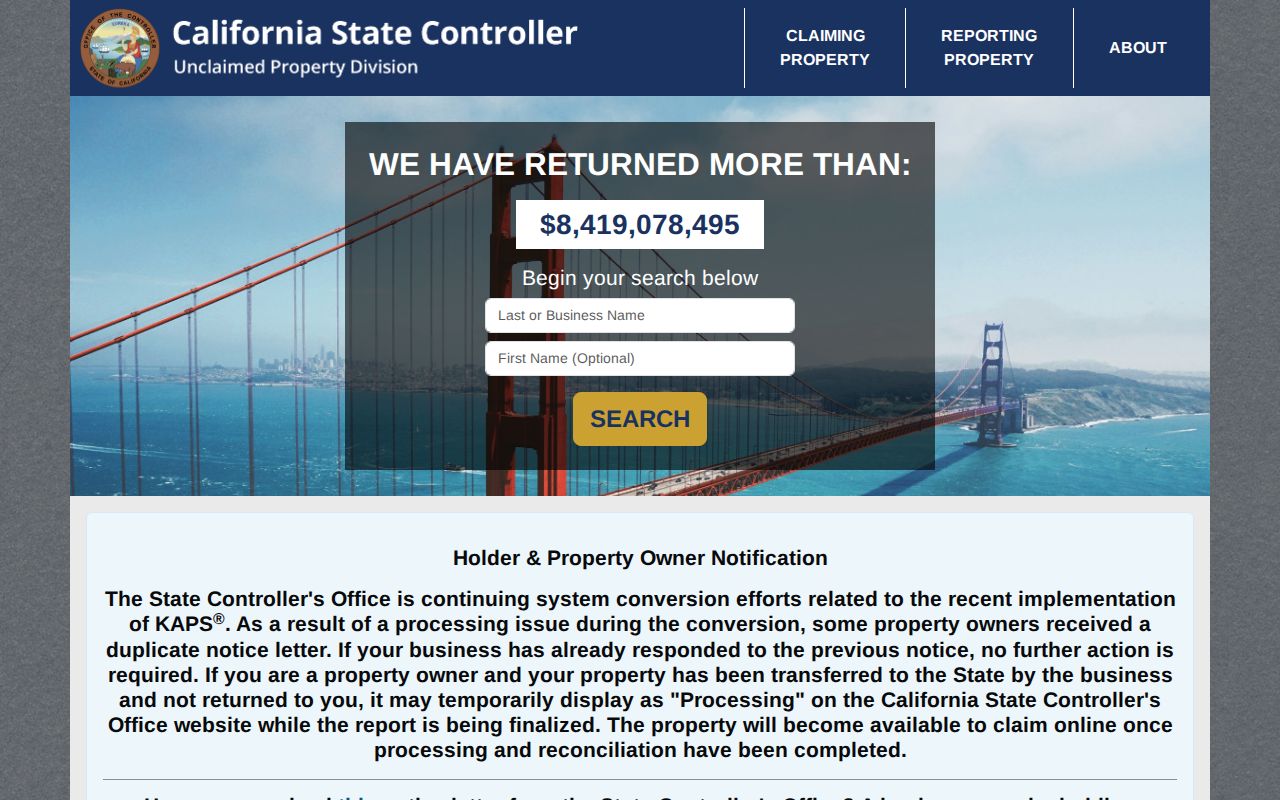
The captured search screen reinforces the difference between a name clue and a location proof. A claim requires evidence of identity or ownership, and the reported city may be stale. Treat any ZIP association as a prompt for source checking, not as a conclusion.
Upland ZIP Sources Compared
Official sources and commercial directory compilations serve different purposes. Postal and parcel systems are closer to the underlying address question, but each is still narrow. A commercial compilation may combine public and marketing data, charge for access, lag corrections, or merge people with similar names. It can be a lead at most; the ZIP-focused guide should send the reader back to the custodian for proof.
| Source type | Useful ZIP question | What it cannot establish |
|---|---|---|
| USPS address result | Which ZIP and postal city belong to an entered address | Who lives at the destination |
| County parcel record | Which APN and situs parcel match the address | A complete household or current occupant list |
| City or county GIS | Which boundary, district, or parcel context surrounds the point | Legal title or private association membership |
| Commercial compilation | A possible lead requiring source verification | Reliable identity, current ZIP, or lawful purpose by itself |
The comparison is especially important when a postal ZIP crosses incorporated Upland and San Antonio Heights. The official map may split the result by jurisdiction, while a commercial record may flatten both into one “Upland” label. Keep the source, date, and field visible in research notes.
Lawful Upland ZIP Research
ZIP information has ordinary, lawful uses: checking an address for a letter, tracing a family history, confirming a public business contact, understanding a civic district, or spotting a records mismatch before contacting an office. The data becomes less reliable when it is used to infer a household from a postal label. It becomes harmful when someone uses public clues to watch, intimidate, or repeatedly pursue a person.
The California Megan's Law website demonstrates why a public search result must stay inside its stated purpose and warning. A registry's own search modes and legal limits do not turn it into a general Upland ZIP directory.
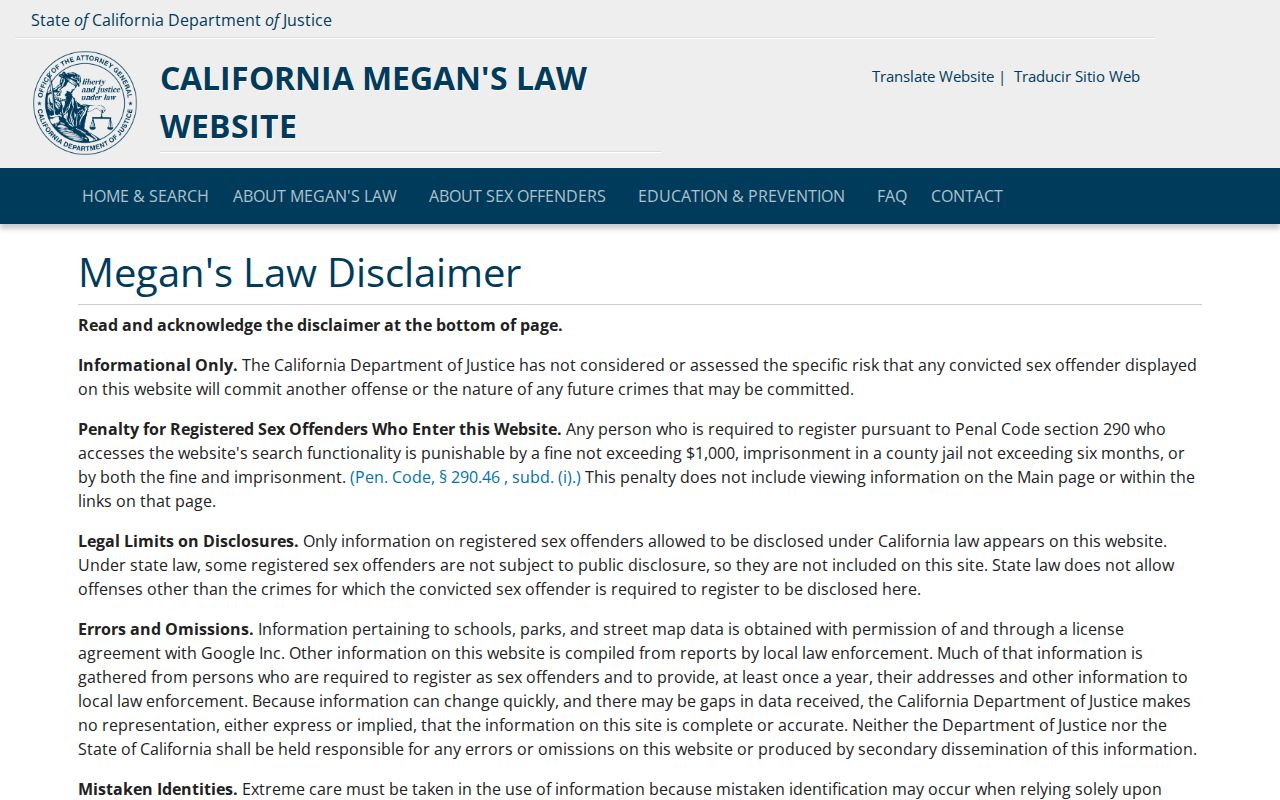
Use a custodian's correction or privacy channel when a source is wrong, and respect California's Safe at Home and confidential voter-registration protections. A postal code is a weak basis for personal claims. Verify the address, use only information allowed for the task, and stop when the source or the law closes the trail.
Lawful use. Upland ZIP research is appropriate for personal records work, family history, civic context, and checking an address you are entitled to understand. Do not use a ZIP, parcel clue, or public result to stalk, harass, intimidate, or harm another person.