
Trace an Upland Street by Address
The strongest Upland street directory workflow moves from a physical location to a parcel key, then from the parcel key to records held by different offices. Start with the number and street as written today. Preserve direction, suffix, unit, and ZIP, but expect older sources to use a different place name or abbreviation. The chain below keeps ownership, voter information, and historical occupants separate.
- Normalize the address and search the San Bernardino County Assessor Parcel Access map to locate the situs parcel.
- Capture the APN, legal subdivision reference, current assessed owner when displayed, and tax mailing field without calling the mailing address a home.
- Use the owner name or APN clue in the Recorder’s grantor-grantee index, obtain the current acquisition deed, and read its legal description before going backward.
- For voter context, use My Voter Status only for the authenticated voter or follow the Registrar of Voters application for a qualifying file purpose.
- Ask Upland Public Library staff for a reverse or criss-cross directory section, then compare the listed address with census, newspaper, and permit dates.
The APN is the bridge. It can join the map to an assessment card and help a records request name the right property. It does not join every person at the address, because nonowner occupants, relatives, protected residents, and unlisted households may not appear in the same sources.
Upland Street Records by Address
Different custodians expose different parts of a street. The assessor and GIS layers are address-keyed. The recorder is party-keyed after the parcel owner is known. The voter file is restricted by purpose, and a reverse directory is a published snapshot with omissions. This coverage table shows how a street directory becomes a chain rather than a single search result.
| Record set | Keeper | Street-level clue | Access and limit |
|---|---|---|---|
| Parcel and assessment | San Bernardino County Assessor | APN, situs, assessed owner or mailing field, values | Free Parcel Access; owner evidence, not an occupant list |
| Parcel geometry and layers | County Assessor and Upland Community View | Boundaries, adjoining parcels, zoning, districts, schools, historic context | Free interactive maps; map facts are not title proof |
| Deeds, liens, and easements | County Recorder | Past owners and recorded transactions after a name is known | 1925-present online index; images ordered or viewed in person |
| Permits and code cases | Upland Building and Safety or City Clerk | Address, APN, owner, applicant, contractor, work, dates and status | CSS when indexed; focused request for gaps and exemptions |
| Authorized voter file | San Bernardino County Registrar of Voters | Residence-address or precinct fields for an approved purpose | Application, wet signature, security terms, and Elections Code limits |
| Reverse directories | Upland Public Library | Listed occupants arranged by address where a street section exists | Non-circulating collection; exact volumes and omissions need staff review |
Use the row that matches the question. A parcel card can start the chain, while a deed can establish a transaction. Neither source proves that every named person lived at the situs. A street directory is most accurate when each claim retains its record type and date.
Upland Parcel Access Search Fields
San Bernardino County Assessor Parcel Access is the address-side starting point. The county recommends Chrome or Firefox and describes a public map rather than a special owner-name query service. Search by the situs first, then save the APN or Property ID before clicking adjacent parcels. If an address does not resolve, normalize the direction, street suffix, unit, and postal spelling before assuming the parcel is absent.
| Field or mode | Type | Required | Format or street use |
|---|---|---|---|
| Property address | Text or autocomplete | One search key | Enter the physical situs; try a normalized suffix or direction. |
| Assessor Parcel Number / Property ID | Text | One search key | Best link from map to assessment and later deed research. |
| Map navigation | Pan, zoom, click | No | Use the parcel polygon to identify adjoining lots and APNs. |
| Layers and basemap | Map controls | No | Compare parcel context with the city’s zoning, school, district, and historic layers. |
A parcel result may display situs, property ID, assessed owner where legally shown, tax-bill mailing address, legal subdivision reference, land and improvement values, assessment year, characteristics, exemptions where displayable, and map geometry. ARC cautions that assessment information does not determine legal ownership or permitted use. The deed and city land-use record remain separate checks.
The San Bernardino County Assessor-Recorder-Clerk service hub is the source for the parcel and recorder entry points used by this Upland street directory.
The service-hub image places parcel, recorder, and clerk functions under one county umbrella while keeping their search rules distinct.
Click an Upland Block in GIS
For a block view, open the parcel map, search the target address or APN, and zoom until the parcel edges show. Click the target polygon first. Record its property identifier, then click each parcel sharing an edge and the parcels across the street. Open each card on its own. A radius or buffer export was not verified, so manual adjacent clicks are the documented method for an Upland street search.
Upland Community View adds more than a boundary. Its verified layers include zoning, historic districts, voting districts, Metrolink, airport safety overlay, pressure zones, parks, public schools, school districts, and public facilities. Those layers explain a street’s civic setting and can point to the right department for a follow-up request. They do not prove that an owner or listed applicant occupies a parcel.
The county ARC department overview is the source for the county mapping and property service context.
The county overview image belongs beside the manual parcel method because it shows the office family behind the map and record layers.
- Parcel
- A mapped property unit tied to an APN and a legal description.
- Situs address
- The physical location of the parcel, used for map and site research.
- Plat
- A recorded subdivision or parcel map that helps connect lots, blocks, and legal descriptions.
- Criss-cross directory
- A reverse directory that may list a published occupant or business by street address.
Situs and Mailing Addresses in Upland
The situs is where the parcel is located. The mailing field is where tax correspondence is sent. A different mailing address may point to an owner’s forwarding location, a trust or entity arrangement, or another correspondence choice. It does not identify another occupant or a household. A matching situs and mailing address can support an owner-occupancy inference, but it remains suggestive rather than conclusive.
Keep both fields in separate notes. When a deed, permit, or tax record repeats one address, label the source and date. California homeowner exemptions may add ownership or occupancy context, but protected details and timing matter. DMV records and utility subscriber data are not open substitutes for a street directory.
That distinction keeps an address search honest. The parcel is a stable research key; the people attached to it can change, be protected, or never appear in an open record.
Why the Upland Recorder Skips Street Search
The San Bernardino County Recorder’s Index is organized by document number, document date, document title, grantor, and grantee. It does not index ownership by street address. A street directory therefore reaches the recorder indirectly: find the APN and assessed owner in Parcel Access, search that person or entity as a grantee, order the current acquisition deed, and verify the legal description before following the grantor backward.
The online index covers 1925-present and does not show document images. Images can be ordered, emailed in noncertified form, mailed as certified copies, or viewed at the Hall of Records in San Bernardino or the High Desert Government Center in Hesperia. Appointments are strongly encouraged. A party hit proves an indexed role in a recorded document, not current ownership, residence, or occupancy.
San Bernardino County elections resources are the source for the county service information shown here.
The county resources image is a reminder that the recorder trail and voter trail sit in separate service channels even when both are used for one address.
Older deed books and indexes require office, archive, catalog, or title research. The 1925 web cutoff is an access boundary, not the start of Upland property history.
Upland Permits and Code Cases by Address
Upland Building and Safety materials describe a customer self-service or CSS portal for permit activity. A construction application can identify the owner, project address, APN, contractor or owner-builder, work description, valuation, and issue or final dates. Those fields can date a change at an address and point to a person’s role in a project. An applicant, architect, contractor, or owner is not automatically a resident.
The stable public page did not expose a complete search-field list or a confirmed earliest permit year. When the CSS view misses an address, make a focused request to the City Clerk naming the street address, APN if known, date range, permit applications, issued permits, inspection or final records, and publicly disclosable code cases. CPRA obtains existing records; it does not require staff to answer “who lived here?”
Code-enforcement activity is subject to exemptions, so an empty response may reflect access rules rather than an empty history. Use the permit trail to explain construction and dates, then use directories, census pages, or newspapers for household evidence.
Authorized Upland Voter Files by Street
The public California voter self-lookup cannot browse Upland streets. A qualified voter-file recipient may request authorized data filtered by street or precinct under the approved purpose, but the application is not a casual address search. San Bernardino County’s form asks for the applicant or organization, residence or business address, contact information, requested geography or product, detailed statutory purpose, people with access, security and storage statements, acknowledgment of restrictions, original signature, and date.
The county channel is 777 E. Rialto Ave., San Bernardino, with a listed phone of 909-387-8300. A voter can buy their own certified application or a current or previous registration letter for $1.50 in person with government photo ID. A certified application contains confidential data, and the office will not give another voter’s confidential application. Weekly reports provide registration totals by party for political jurisdictions, not names.
San Bernardino County voter registration records is the source for the file-request channel shown here.
The county voter-records image marks the difference between an approved file request and a public street lookup.
Elections Code §§2180-2194.1, confidential identifiers, protected addresses, and anti-harassment rules remain in force even when a geographic request is approved.
Upland Street Directories and Reverse Entries
Upland Public Library confirms a local-history collection reaching the late 1800s, with directories, city and business documents, photographs, newspapers, yearbooks, and oral histories. Exact publishers, years, telephone runs, and reverse-directory volumes are not published online. Ask Reference and Local History staff to check the title page, nominal year, canvass date, geographic coverage, abbreviation key, and whether a street or criss-cross section exists.
Start with a surname entry, copy the address and spelling exactly, then test the address in a reverse section if one exists. A directory may omit a household because of publication gaps, canvass refusal, coverage boundaries, spouse listing, spelling variation, or an old street label. Pair 1900-1950 directory years with the decennial census to add relationship, age, birthplace, occupation, and tenure clues.
Use “Upland,” “North Ontario,” and “Magnolia” when searching older material. Upland News began in 1901 as North Ontario News, and its digitized issues can add notices, obituaries, property transfers, club news, and business ties. Detailed directory-entry reading belongs with the Upland city directory collections material, while current parcel work stays address-keyed here.
Postal Upland at 91784 and San Antonio Heights
USPS ZIP geography does not follow municipal lines. ZIP 91784 reaches northern Upland and the postal San Antonio Heights area, which is unincorporated. A mailing city that says Upland can therefore route land-use, fire, permit, and address questions to San Bernardino County rather than City Hall. ZIP 91786 covers central and southern Upland and much of the developed valley floor, but a specific parcel still needs boundary verification.
Use the USPS city-and-state lookup for a general ZIP set, then look up the exact address. Cross-check the result in the county parcel map and Upland Community View. A postal label is not proof of city jurisdiction, and a ZIP is not a resident directory. The 91785 designation also needs current USPS confirmation before it is treated as a residential geography.
USPS ZIP Code guidance is the source for the postal-boundary distinction in this Upland street directory.
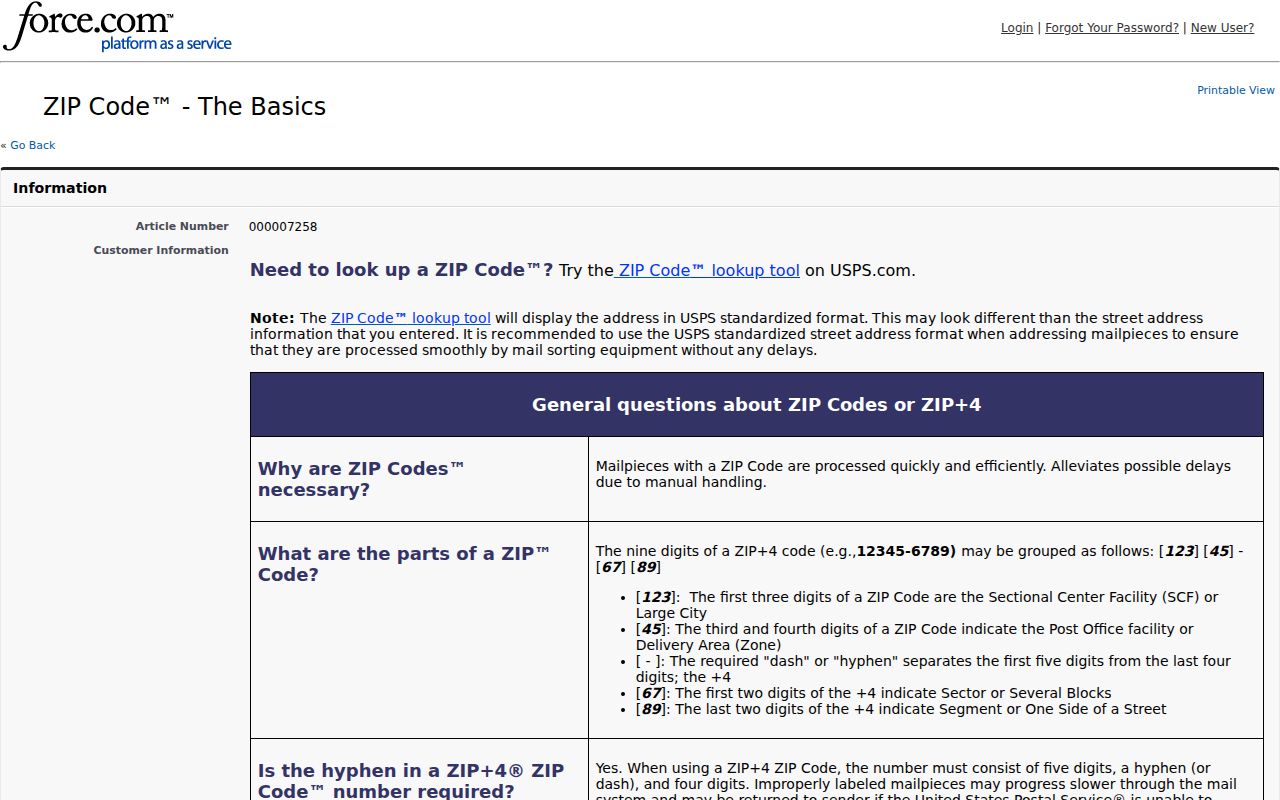
The USPS image belongs beside the jurisdiction check because a postal Upland address can lead to a county custodian.
Upland Address Records When Portals Stop
Online tools are only one access channel. The Hall of Records and Hesperia office support recorder images and older index work. The Assessor and Recorder-Clerk can answer phone questions at 909-387-8307 and 909-387-8306. The City Clerk accepts a focused CPRA request for existing permits or code material. The library supplies non-circulating directories and newspaper history. A courthouse clerk handles court files from the filing district, not a CPRA inbox.
Sheriff records requests are individually reviewed under CPRA, Vehicle Code, Welfare and Institutions Code, and privacy exemptions. Current inmate booking photos are generally not released. That request route may clarify a county record boundary, but it is not an open list of people at an Upland address. Confirm the correct custodian before sending identification or a copy request.
San Bernardino County Sheriff public-records instructions are the source for the request boundary shown here.
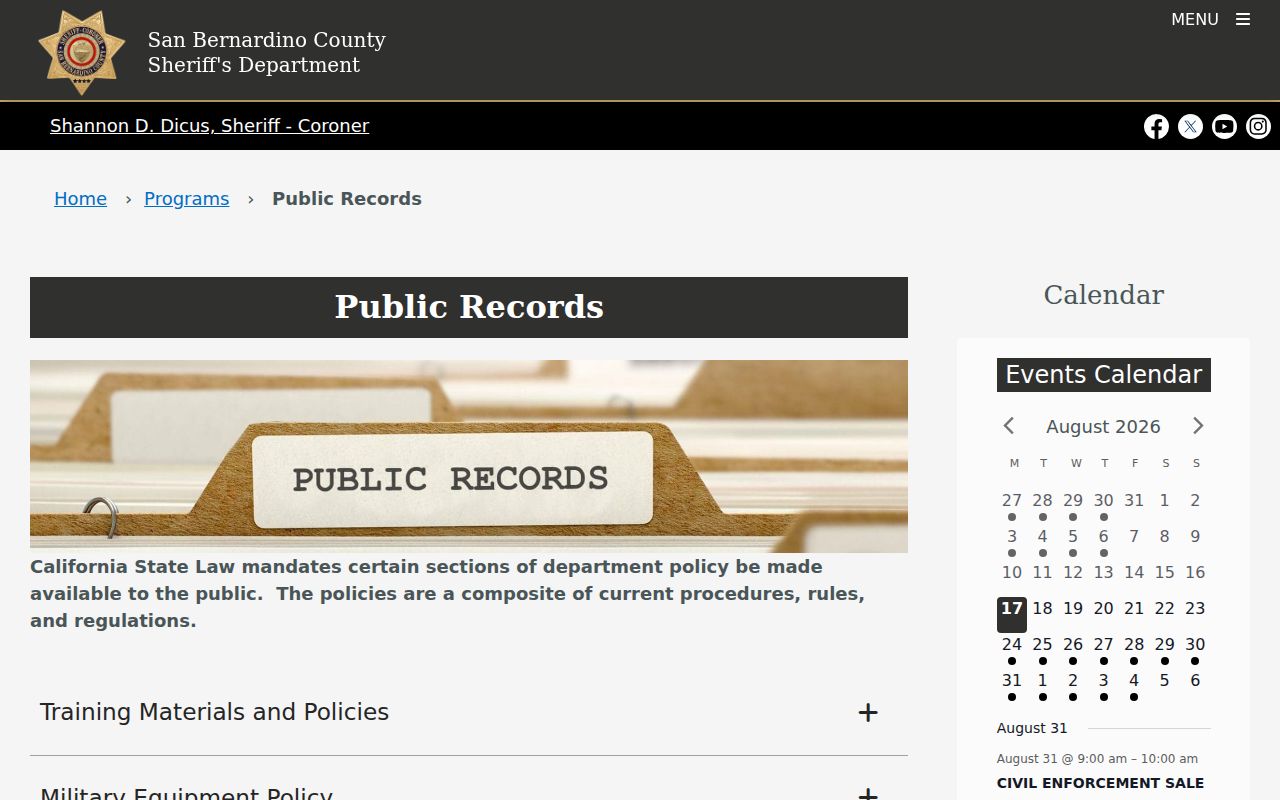
The Sheriff image shows why a public-record request is reviewed for disclosure rather than treated as an automatic name or address release.
Limits on an Upland Street Directory
No open database lists every person living at each Upland address. The assessor names an assessed owner when its public display allows it. Deeds name parties to transactions. Permits name project roles. Directories list households that were captured by a publisher. The voter file has statutory access rules, and DMV or utility subscriber data is restricted. A reverse lookup can therefore miss nonowner occupants, relatives, roommates, protected residents, vacant parcels, and people who were never listed.
Lawful personal use. Use an Upland street directory for family history, property and civic research, reconnecting, estate work, or personal safety. Do not use public names, addresses, voter data, court data, or custody data to stalk, harass, threaten, intimidate, or harm anyone. California stalking and harassment laws, voter-file restrictions, Megan’s Law warnings, confidentiality programs, and other privacy rules still apply.
When a record is protected or a match is uncertain, stop at the boundary. Confirm the APN, document, case, date, or office before repeating a name. The most reliable street directory is a careful chain of sources, not a larger list.